Custom Zipper MOQ, Sampling and Lead Times: A Buyer’s Guide
Custom zipper sourcing becomes much easier once three numbers are separated: the minimum order quantity (MOQ), the sample lead time, and the bulk-production lead time. Buyers often ask for one delivery date before the colour, gauge, slider, puller and testing requirements are fixed. A factory cannot give a dependable answer that early because each decision changes the manufacturing route.
Here is the short answer. For CEO Zipper’s standard programmes, published MOQs generally start at 2,000–3,000 pieces per colour. A fully bespoke programme involving custom tooling normally starts at 5,000 pieces. Standard production is commonly 15–30 days, while a new custom design typically needs 7–14 days for sampling and 30–45 days for production after sample approval. These are planning ranges, not a substitute for a quotation based on the final specification.
This guide explains what sits behind those numbers, how to reduce avoidable delays, and what a buyer should send to receive a useful quotation on the first round.
Quick planning table
| Programme | Published MOQ | Typical lead time | Main variables |
|---|---|---|---|
| Nylon coil | 3,000 pcs per colour | 15–25 days | Gauge, tape dye, end type, slider |
| Metal | 3,000 pcs per colour | 20–30 days | Tooth metal, plating, tape, puller |
| Resin | 3,000 pcs per colour | 18–28 days | Tooth colour, moulding, gauge |
| Invisible | 3,000 pcs per colour | 15–25 days | Tape colour, length, slider |
| Waterproof | 2,000 pcs per colour | 20–30 days | TPU film, finish, water target |
| Reflective | 3,000 pcs per colour | 20–30 days | Reflective tape, chain, branding |
| Fully custom / new tooling | 5,000 pcs | 7–14 day sample; 30–45 day production | Mould, logo, special components, packaging |
The ranges above reflect the product specifications currently published on our zipper product pages. Quantity is only one part of the calculation; one order split into many colours may require more production setups than a larger single-colour order.
What does MOQ mean for a custom zipper?
MOQ is the smallest commercially workable quantity for one defined manufacturing setup. For zippers, that usually means one combination of colour, gauge, chain type and finish—not the total number of mixed items on a purchase order.
Suppose a buyer wants 6,000 #5 nylon zippers divided among six Pantone colours. Operationally, that is closer to six 1,000-piece runs than one 6,000-piece run. Each colour needs tape preparation, dye control, machine setup, matching components and inspection. The total volume looks healthy, but the quantity per colour may still sit below the standard MOQ.
That is why a useful MOQ conversation should define the unit of variation:
- pieces per colour;
- pieces per size or length;
- pieces per slider or puller design;
- pieces per plating finish;
- pieces per packaging format.
An honest factory should explain which variation triggers a new setup rather than quoting a single headline number that later changes.
Why custom zipper MOQs exist
MOQ is not an arbitrary penalty for smaller brands. It reflects the fixed work needed before the first acceptable zipper comes off the line.
Tape dyeing and colour control
Pantone matching requires a controlled dye lot. Very small lots consume preparation, colour adjustment, drying and approval time while producing little usable tape. Combining one colour across several zipper lengths is often easier than combining unrelated colours.
Machine setup and changeover
Gauge, chain construction, end type and slider geometry determine how equipment is configured. Open-end, closed-end and two-way zippers do not follow exactly the same assembly route. Every changeover also creates setup pieces that cannot be shipped.
Plating and surface finishes
Metal teeth, sliders and pullers may require brass, aluminium, gunmetal or another specified finish. A small plating batch still needs bath preparation, colour control and corrosion verification. If the exact finish already exists in the production schedule, consolidation may be possible; if it is unique, the economics change.
New moulds and branded hardware
A logo engraving is simpler than a new three-dimensional puller shape. A custom pull mould adds drawing confirmation, tooling, trial shots, dimensional checks and approval. The 5,000-piece custom-tooling MOQ reflects that additional development path. Our custom zipper page shows the available tape, tooth, slider, puller and packaging options.
Quality assurance
The factory must inspect a production lot whether it contains 1,000 pieces or 30,000. Pull testing, slider checks, length checks, tape-colour inspection and export packing all have fixed elements. Lowering the lot size does not remove those controls.
Sample lead time: what happens during 7–14 days?
A sample is not merely a miniature bulk order. It is the stage where an idea becomes an approved manufacturing specification. A straightforward sample assembled from available components may move quickly. A bespoke sample takes longer because several decisions must be frozen in sequence.
Specification review
The factory checks whether the requested size, length, opening style, tape width and component combination are technically compatible. This is also the best moment to identify contradictions in a tech pack.
Colour and finish confirmation
A Pantone code helps, but it does not show how the colour will appear on a particular tape fibre, TPU film or plated surface. For colour-critical programmes, approval should be based on a physical submission viewed under agreed lighting.
Component preparation
Standard sliders and pullers can be drawn from existing stock. A custom logo, finish or mould needs an extra preparation step. If packaging is part of the approval sample, artwork and material must also be confirmed.
Assembly and factory checks
The sample is assembled in the requested construction and checked for slider movement, tooth alignment, usable length, appearance and relevant performance. Waterproof developments may also require water and cycle checks. Our quality-control overview explains the in-house tensile, salt-spray and finished-goods inspections used for production.
Buyer review
The sampling clock does not end when a parcel leaves the factory. Shipping, internal fitting, wear trials and decision-making sit on the buyer’s critical path. A clear approval owner and a consolidated comment sheet can save more time than asking the factory to rush one day.
Bulk lead time: what starts after sample approval?
Bulk lead time should begin only after four items are settled: the approved sample, final purchase order, confirmed artwork or colour references, and agreed commercial terms. If any of these changes, the production clock may need to restart.
A typical zipper order moves through:
- material and component planning;
- tape dyeing or film preparation;
- tooth forming, coil production or metal processing;
- slider and puller preparation;
- cutting, end finishing and assembly;
- batch testing and visual inspection;
- counting, packing and shipment release.
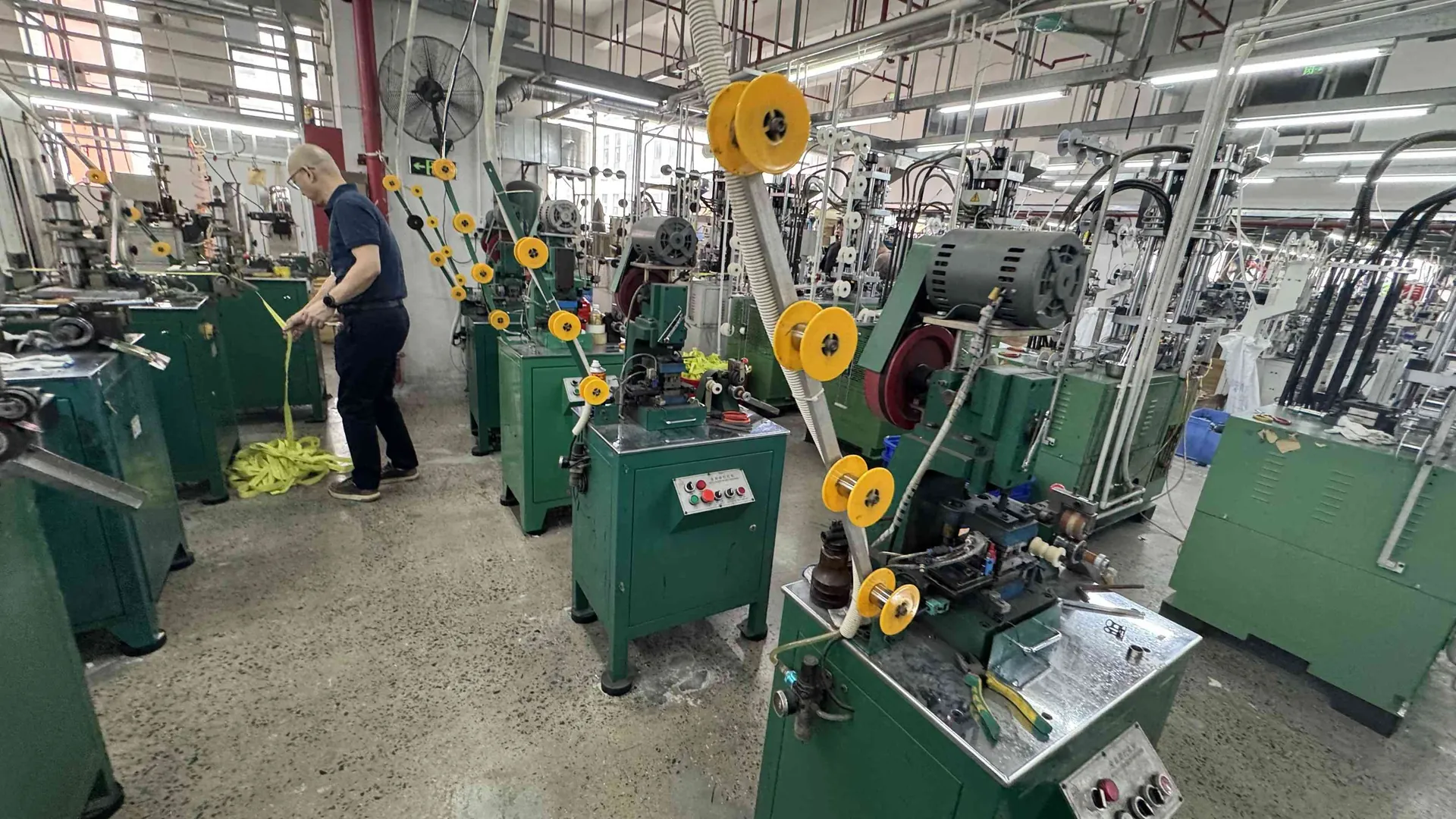
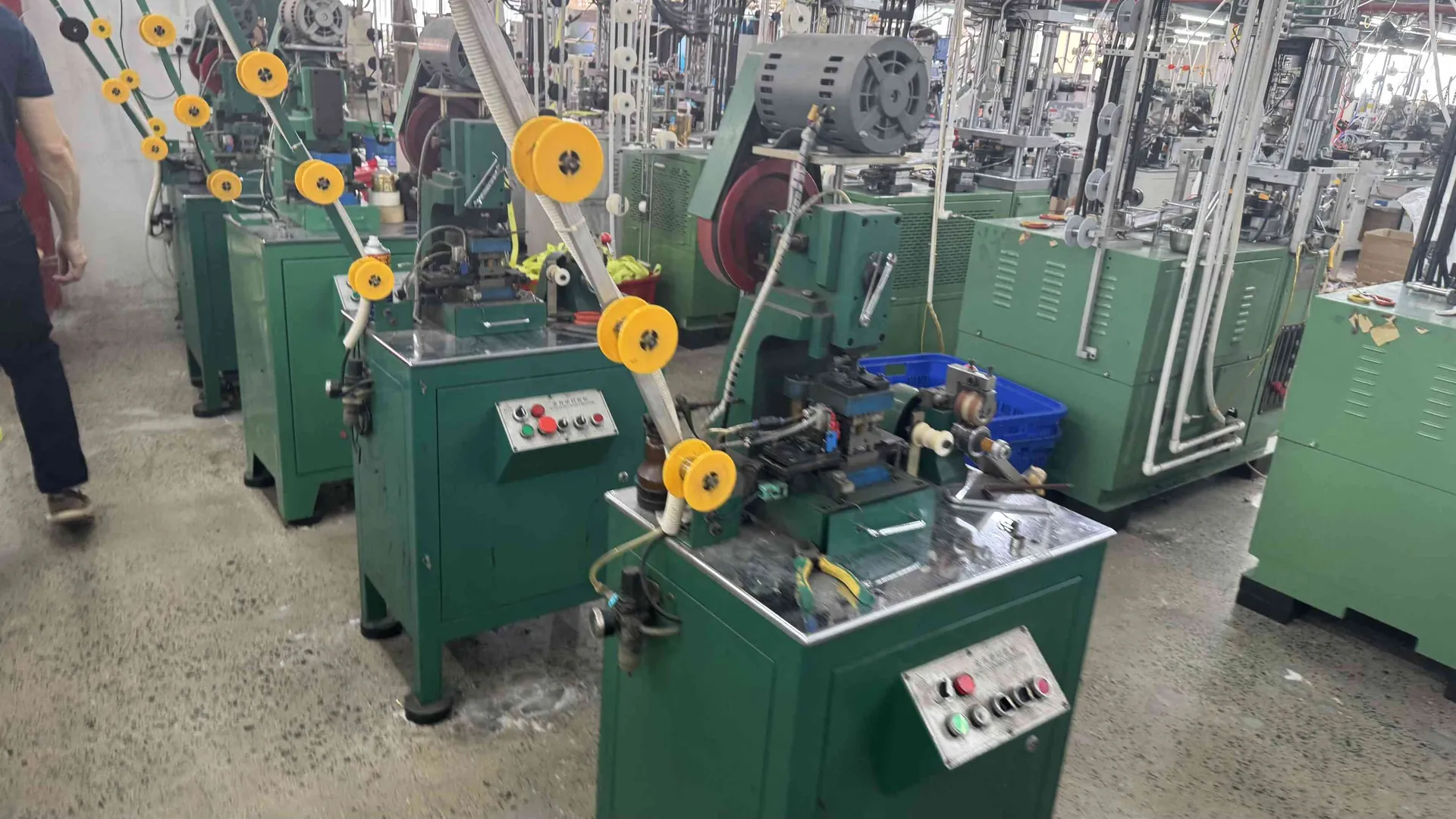
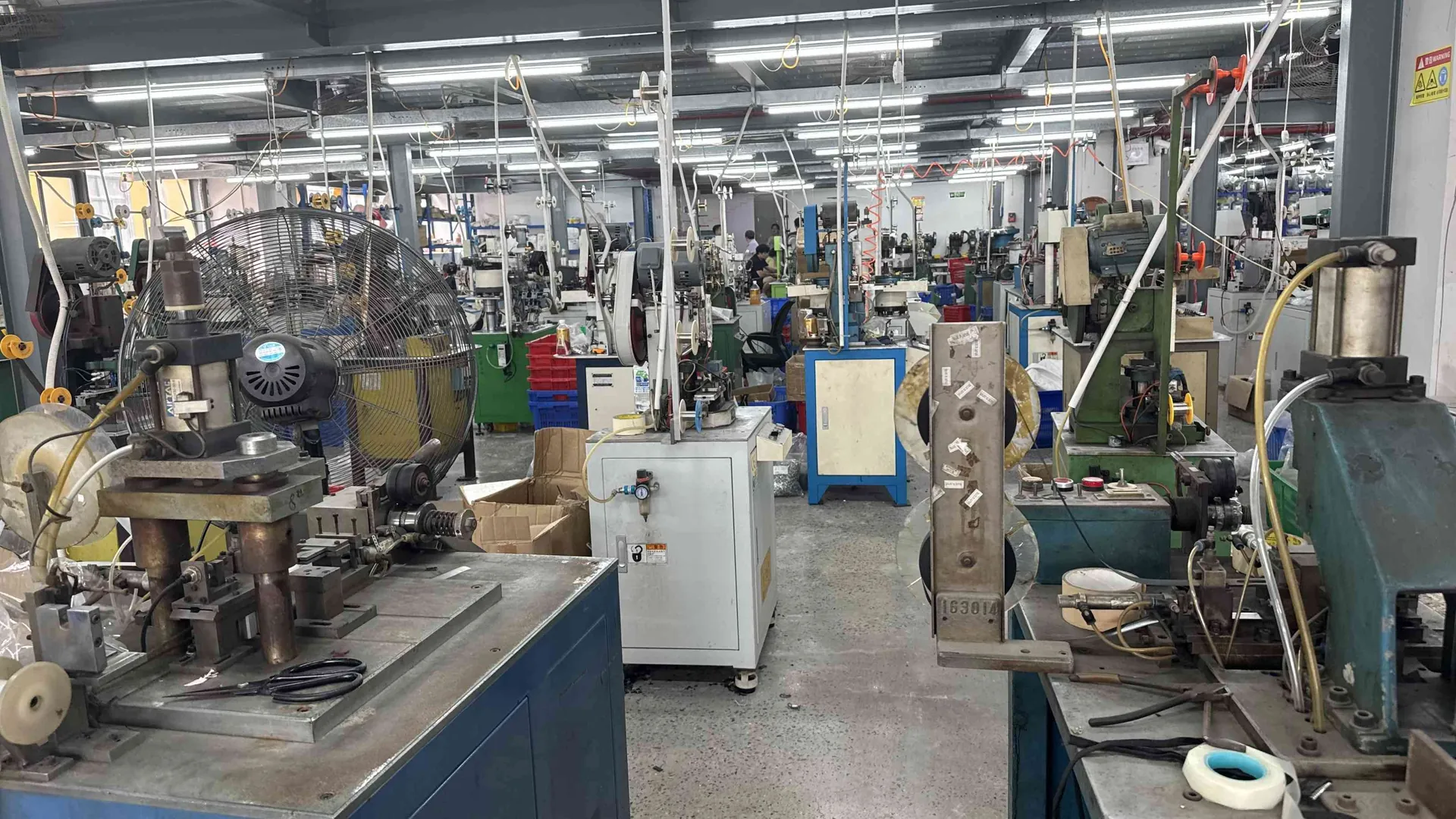
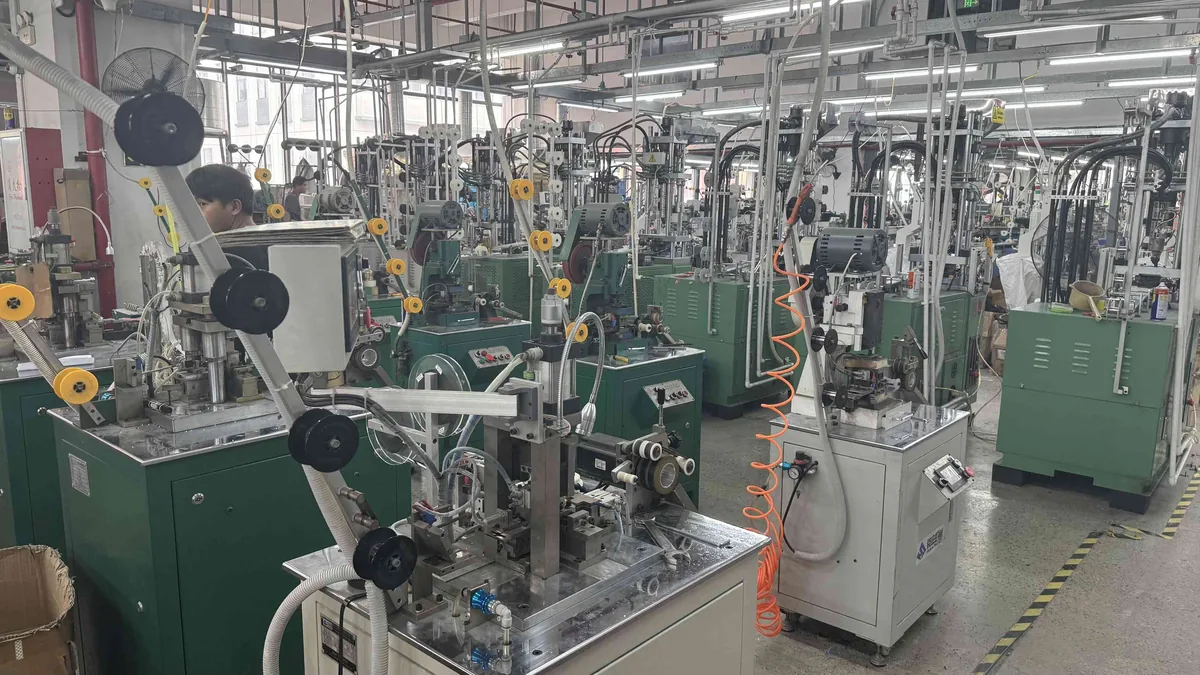
Because CEO Zipper operates injection moulding, assembly and metal-zipper lines in Foshan, more of these steps remain under direct factory control. The production areas can be seen in the factory tour.
Seven factors that change the delivery date
1. Number of colours
Ten thousand pieces in one black tape are normally easier to schedule than ten thousand pieces divided among ten custom colours. Count colourways, not only total units.
2. Standard versus custom hardware
Existing sliders, pullers and moulds shorten preparation. New branded hardware needs drawings, tooling and approval.
3. Zipper construction
Closed-end nylon coil is a simpler route than a two-way waterproof zipper with a special puller and retail packaging. Complexity should be discussed before the launch calendar is fixed.
4. Testing requirements
Routine in-house checks can fit within normal production. A buyer-specific protocol, third-party laboratory test or repeated pre-production trial needs extra time. State the standard and acceptance threshold at quotation stage.
5. Approval speed
Factories cannot approve colour, logo proportions or puller feel on behalf of a brand. Late or fragmented comments create idle time and rework.
6. Packaging
Bulk polybags are faster than printed cards, barcodes, assortments or store-ready packs. Packaging is part of the production specification, not a final administrative detail.
7. Peak-season capacity
Lead times are planning estimates, not permanent reservations. Forecasts and early booking matter when several programmes compete for the same line or dyeing window.
How to reduce MOQ without weakening the product
The best route is usually to reduce variation, not quality.
- Consolidate lengths under one tape colour and construction where possible.
- Use an existing slider body and add logo engraving instead of opening a new mould.
- Choose a standard plating finish that can join a larger production batch.
- Keep packaging simple for the first order, then upgrade after demand is proven.
- Separate the development sample from the commercial quantity discussion.
- Ask whether one approved component can be used across several garment styles.
Do not reduce MOQ by accepting an undersized gauge, unverified plating or skipped testing. A lower purchase quantity is not a saving if the zipper fails in the finished product.
What to send when requesting a quotation
A message saying “Please quote custom zippers” invites a long email chain. A decision-ready request should include:
| Required detail | Example |
|---|---|
| Application | Lightweight jacket, leather boot, camera bag |
| Zipper type | Nylon, metal, resin, invisible, waterproof, reflective |
| Gauge | #3, #5, #8 or #10 |
| Finished length | State the measuring method and tolerance |
| End configuration | Closed-end, open-end, two-way |
| Tape and tooth colour | Pantone code plus physical swatch if critical |
| Slider and puller | Standard, engraved logo or new mould |
| Quantity | Pieces per colour, length and style |
| Testing | Pull strength, salt spray, water target, buyer protocol |
| Packaging | Bulk, assortments, barcode or retail pack |
| Required date | Ex-factory date and destination deadline |
If the length is not yet settled, use our guide to measuring a zipper correctly before issuing the purchase order.
A realistic sourcing timeline
For a new custom programme, work backwards from the date the finished garment or bag must leave its assembly factory—not from the zipper delivery date alone.
- Technical alignment: confirm construction, size and intended use.
- Sample development: allow 7–14 days for a bespoke sample.
- Courier and evaluation: include transit, fitting and internal approval.
- Revision buffer: reserve time for one controlled correction if the colour or hardware needs adjustment.
- Bulk production: typically 30–45 days for a fully custom programme after approval.
- Inbound logistics: add freight, customs and receiving time before sewing starts.
The safest calendar contains a decision buffer. The fastest calendar is not the one with the most “urgent” messages; it is the one with the fewest unresolved specifications.
Frequently asked questions
What is the MOQ for a custom zipper?
Published starting points are generally 2,000–3,000 pieces per colour for standard product families and 5,000 pieces when new custom tooling is required. The exact MOQ depends on colour splits, hardware, finish, size and packaging.
Can different lengths be combined to reach the MOQ?
Often they can when the tape colour, gauge, chain and components remain the same, but the length breakdown still affects cutting and packing. Confirm the assortment before relying on a combined quantity.
How long does a zipper sample take?
A fully custom sample typically takes 7–14 days. Standard-component samples may be faster; new moulds, special plating, custom dyeing or additional testing can extend the schedule.
When does bulk-production lead time begin?
It should begin after the sample, specification, artwork or colour reference, purchase order and commercial terms are all approved. A later change may require a revised delivery date.
What is the fastest way to get an accurate quote?
Send the application, zipper type, gauge, length, end configuration, colour, slider or puller requirement, quantity per variant, testing, packaging and required date in one brief.
Final recommendation
Treat MOQ, sampling and lead time as one connected manufacturing plan. Fix the product architecture first, reduce unnecessary variation, approve one physical standard, and then lock the bulk calendar. That approach produces a more reliable price and a more reliable zipper than negotiating each number in isolation.
Planning a new zipper programme? Send CEO Zipper your specification for a factory review, sample recommendation and quotation.