Waterproof Zippers: The Complete Technical Guide
“Waterproof zipper” is one of the most misused terms in apparel sourcing. It is used to describe everything from a genuinely sealed TPU-laminated closure to an ordinary coil zipper with a storm flap sewn over it. If you are specifying gear that has to keep water out, the difference matters — and it is the difference between a product that performs and a warranty claim.
This guide explains what makes a zipper actually waterproof, how the ratings work, the spec mistakes we see most often, and how to verify performance before you commit to production.
Water resistant vs. waterproof: the language problem
There is no single legal definition of “waterproof” for zippers, which is why the marketing is so loose. In practice, closures fall on a spectrum:
- Water resistant: Standard zipper plus a physical barrier (storm flap, garage, or DWR-treated tape). Slows water but does not seal.
- Water repellent: Tape and components treated to shed water, but the chain itself is not sealed.
- Waterproof (sealed): A continuous impermeable barrier — typically a TPU film laminated to the tape with a reverse coil — that resists water penetration under pressure.
When a spec sheet says “waterproof,” your first job is to find out which of these it actually means.
How a real waterproof zipper is built
A genuine waterproof zipper is an engineered laminate, not a treated coil. The key elements:
TPU-laminated tape
A thermoplastic polyurethane (TPU) film is calendered onto the woven tape. This film is the waterproof barrier. Quality depends on film thickness, lamination temperature and bond strength — get any of these wrong and the film delaminates after repeated flexing.
Reverse-coil construction
The coil is mounted on the back of the tape so the smooth TPU face sits outward. This keeps the teeth protected and presents an unbroken film to the weather.
Sealed or welded ends
Stops and box/pin are sealed so water cannot enter at the terminations — a commonly overlooked failure point.
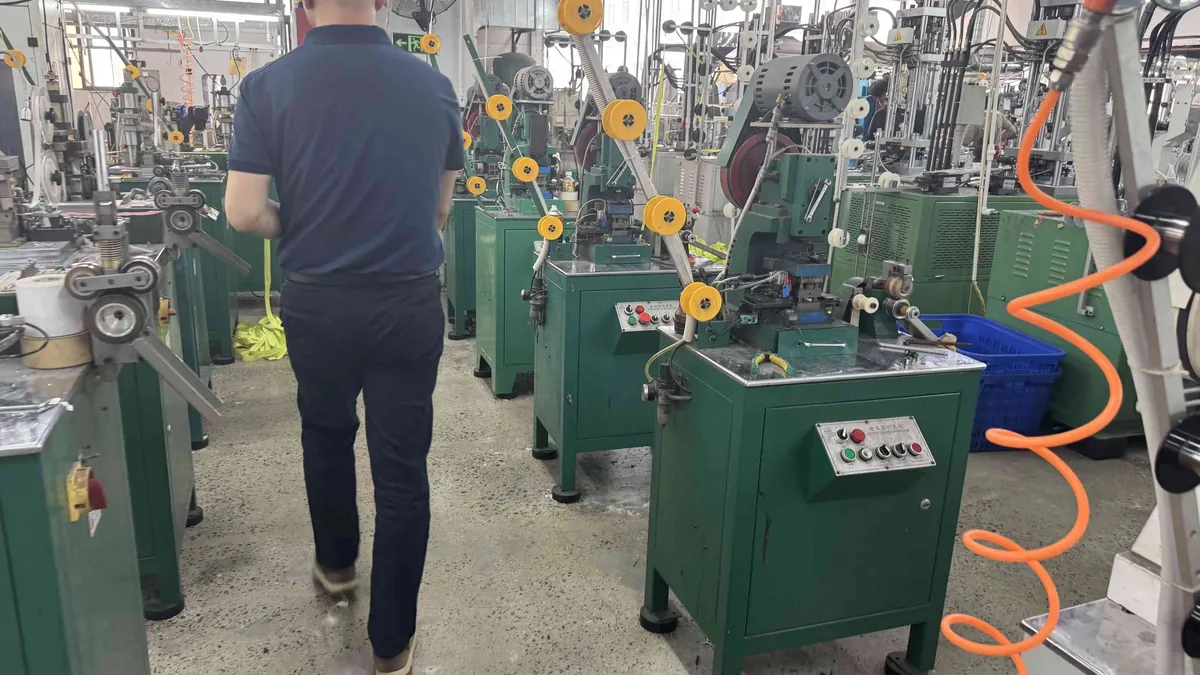
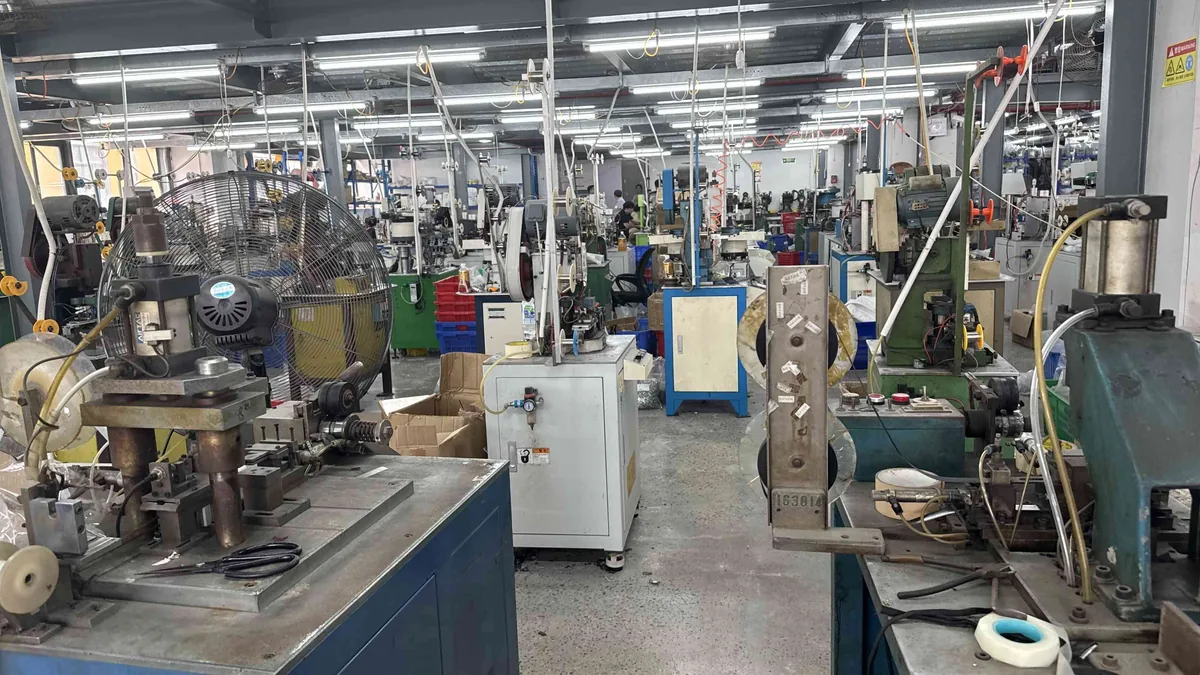
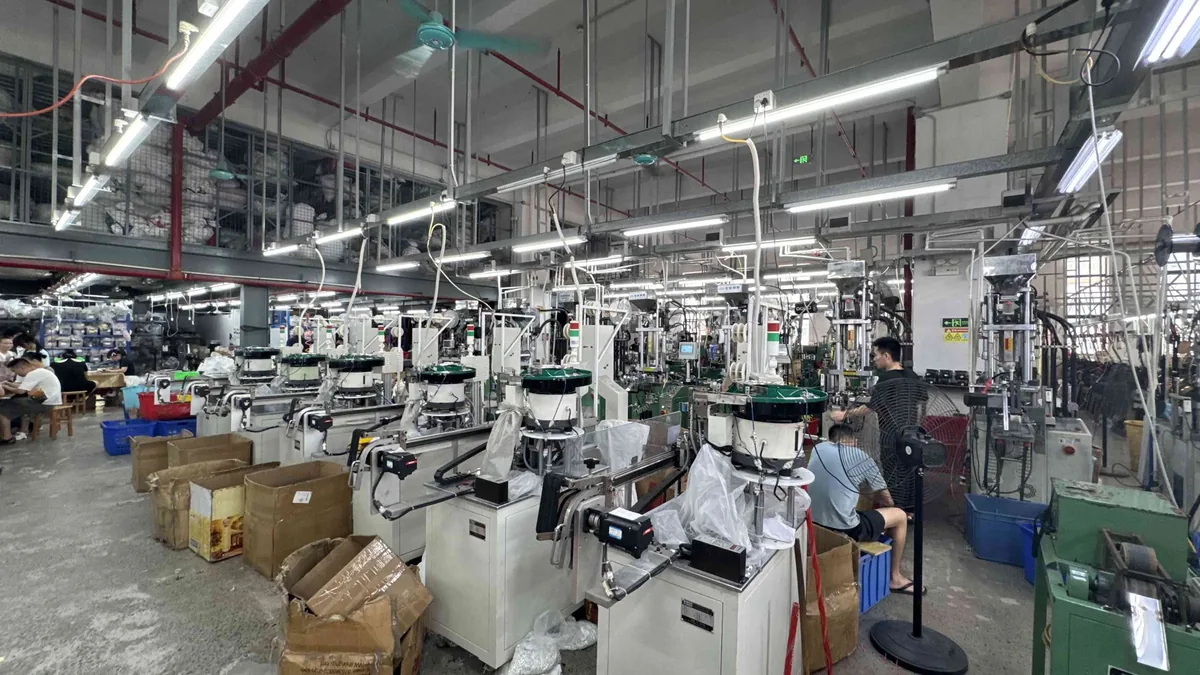
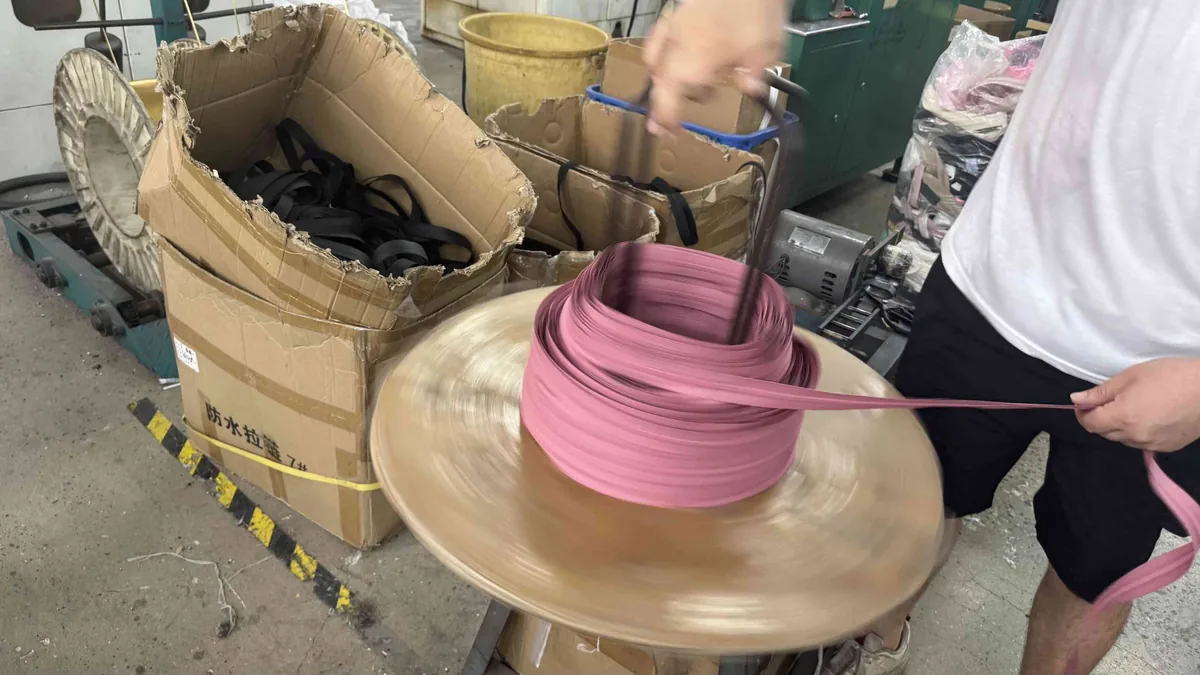
You can see the TPU tape being coiled on our waterproof zipper production line; the pink film in those photos is the laminate that does the work.
Understanding IPX ratings
The IP (Ingress Protection) code is the most useful shorthand for water performance. The second digit (or the digit after “X”) describes water resistance:
| Rating | Protection | Typical use |
|---|---|---|
| IPX2 | Dripping water at an angle | Light showers |
| IPX4 | Splashing from any direction | Everyday rainwear |
| IPX5 | Low-pressure water jets | Outdoor, technical, camera bags |
| IPX6 | High-pressure water jets | Marine, heavy-duty |
| IPX7 | Temporary immersion | Specialist dry storage |
For most apparel and gear, IPX5 is the practical sweet spot: it withstands sustained low-pressure jets (driving rain, hose-down) without the cost and stiffness of fully submersible constructions. Our waterproof zippers are engineered to hold an IPX5 seal even after 5,000+ open-close cycles — durability matters as much as the initial rating.
Specifying a waterproof program? Tell us your IPX target and use case and we will recommend a construction.
The three most common spec mistakes
After years of producing waterproof zippers, three errors account for the majority of field failures.
Mistake 1: Rating the zipper, not the system
A zipper rated IPX5 in isolation does not make an IPX5 garment. Seam tape, fabric, stitching and the zipper terminations all have to match the target. Specify the system rating, then choose a zipper that meets or exceeds it.
Mistake 2: Ignoring cycle life
A film that seals at zero cycles but delaminates at 2,000 is useless for a jacket worn daily. Always specify a minimum cycle count at the rated IPX level — we test to 5,000+.
Mistake 3: Wrong size for the load
Waterproof zippers run heavier than coil. Under-sizing for a heavy garment or a bag under load leads to separation and seal failure. Match the gauge (#3, #5, #8) to the application, not just to the look.
How to test a waterproof zipper
Do not take “waterproof” on faith. Before production, run — or commission — these checks:
- Hydrostatic / spray test to the target IPX level on the finished assembly, not just the zipper.
- Cycle test: open and close to the specified count, then re-run the water test to confirm the seal survives.
- Delamination check: flex the tape repeatedly and inspect the TPU bond.
- Pull test: confirm lateral pull strength still meets the ≥ 3 kg threshold after cycling.
A serious manufacturer performs these in-house. See our full process on the quality page.
Choosing the right construction
- Rainwear and everyday outerwear: IPX4–IPX5, #3 or #5, glossy or matte film to match the shell.
- Technical outdoor and packs: IPX5, #5 or #8, reverse coil with sealed ends.
- Camera and dry bags: IPX5–IPX6 depending on exposure, welded construction.
- Medical and clean-room garments: IPX5, matte film, full colour matching for brand consistency.
The bottom line
A waterproof zipper is a precision laminate, and the word “waterproof” on its own tells you almost nothing. Pin down the IPX target for the whole system, demand a cycle-life figure, size the gauge to the load, and verify with real water testing. Get those four things right and the closure will outlast the garment.
Ready to build a waterproof program that survives the field? Request a quote and a sample you can test yourself.
Frequently asked questions
What does IPX5 mean for a zipper? IPX5 means the closure resists sustained low-pressure water jets from any direction. It is the practical standard for rainwear, outdoor gear and camera bags.
Is a waterproof zipper the same as a water-resistant one? No. Water-resistant usually means a standard zipper with a flap or coating. A true waterproof zipper has a continuous TPU film laminated to the tape that seals against water under pressure.
How long does a waterproof zipper stay sealed? It depends on construction. A quality TPU-laminated zipper should hold its rating past 5,000 open-close cycles; always specify a minimum cycle count.
Can waterproof zippers be made in custom colours? Yes. The TPU film can be produced in glossy or matte finishes with full colour matching to your shell fabric.
What size waterproof zipper do I need? Match the gauge to the load: #3 for light rainwear, #5 for general outerwear, and #8 for heavy gear and bags under tension.